
Wireless sensing research platform

Working prototype · physically exercised

Turn an emerging sensing idea into a system that can be observed and evaluated.

Pegasus Sense combines embedded wireless devices with a Windows research interface for controlled acquisition, visualization, recording, replay, and experiment review. It makes signal behavior visible and keeps interpretation tied to observed measurement evidence.

Platform: Windows + ESP32-S3Role: Product direction, integration, experiment design, acceptanceMaturity: Working research prototype
For a hiring managerThis project shows how I take a technically promising idea, organize the hardware and software around a usable research workflow, and keep conclusions tied to what the evidence actually supports.
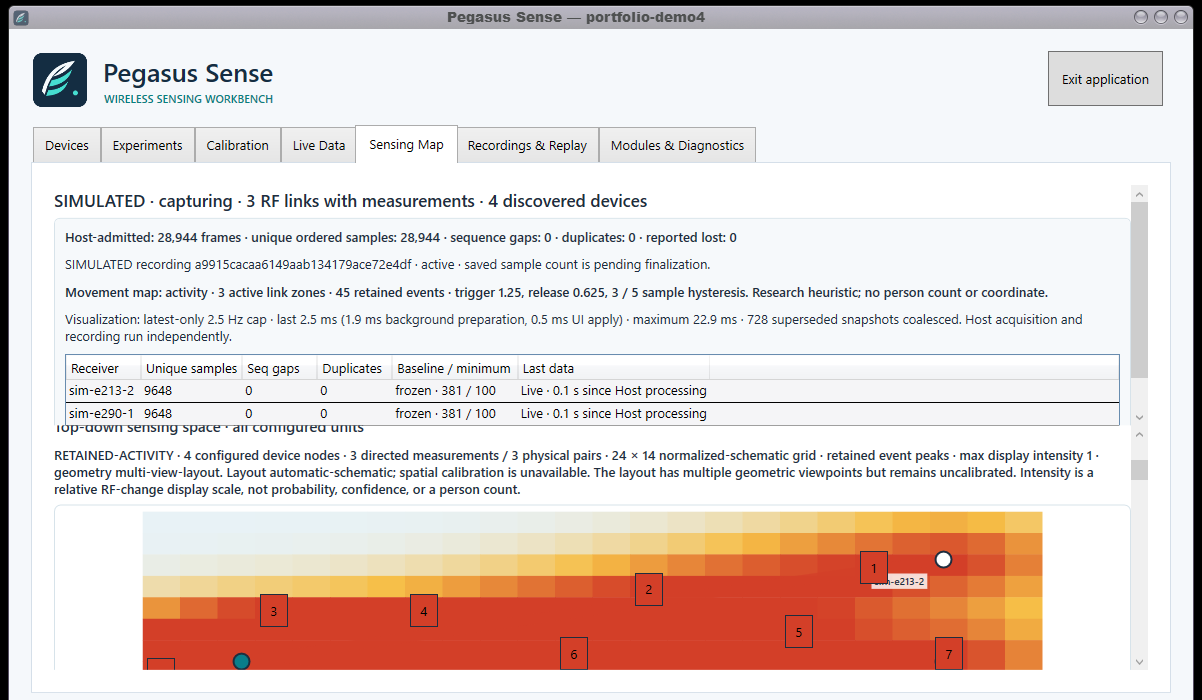
Pegasus Sense Windows interface running a simulated four-device sensing session with a generated activity field
Actual Windows interface using the product’s built-in simulated-device fixture. No physical device identities or customer data are shown.

The practical problem

Turn raw radio measurements into a usable research system.

Exploratory sensing requires more than collecting values. The operator needs a repeatable way to connect devices, understand data quality, compare conditions, preserve observations, and revisit an experiment without relying on memory. Pegasus Sense brings those activities into one operator-facing workbench.

What the platform enables

One workflow from physical experiment to reviewable evidence.

Connected experiments

Coordinates multiple ESP32-S3 devices and presents their status through a Windows desktop application.

Visible signal behavior

Shows relative activity, trends, quality indicators, and experiment state so changes can be inspected while a run is active.

Repeatable review

Records and replays sessions so observations can be compared, diagnosed, and discussed after the physical setup has changed.

My ownership

Hold the complete experiment together and preserve the evidence context.

Product framingDefined a research workbench focused on controlled observation and measurable signal behavior.
Systems integrationDirected the embedded-device, Windows application, data-acquisition, visualization, and recording work as one usable product.
Quality and diagnosticsRequired device status, signal quality, loss indicators, replay, and clear separation between measurement and interpretation.
Physical acceptanceExercised the real hardware and operator workflow, documented observed environmental response, and defined the next detector-validation stage.

Physical observation

The displayed activity changed with a simple close-versus-far comparison.

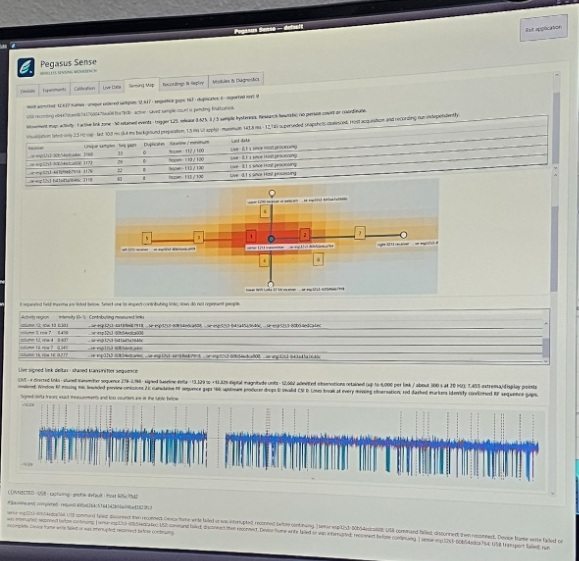
In one exploratory physical setup, moving the reference closer produced a stronger displayed activity field; moving it farther away produced a weaker one. The full interface views show the complete operator context and provide end-to-end evidence that the devices, acquisition path, processing, and visualization respond to a real environmental change.
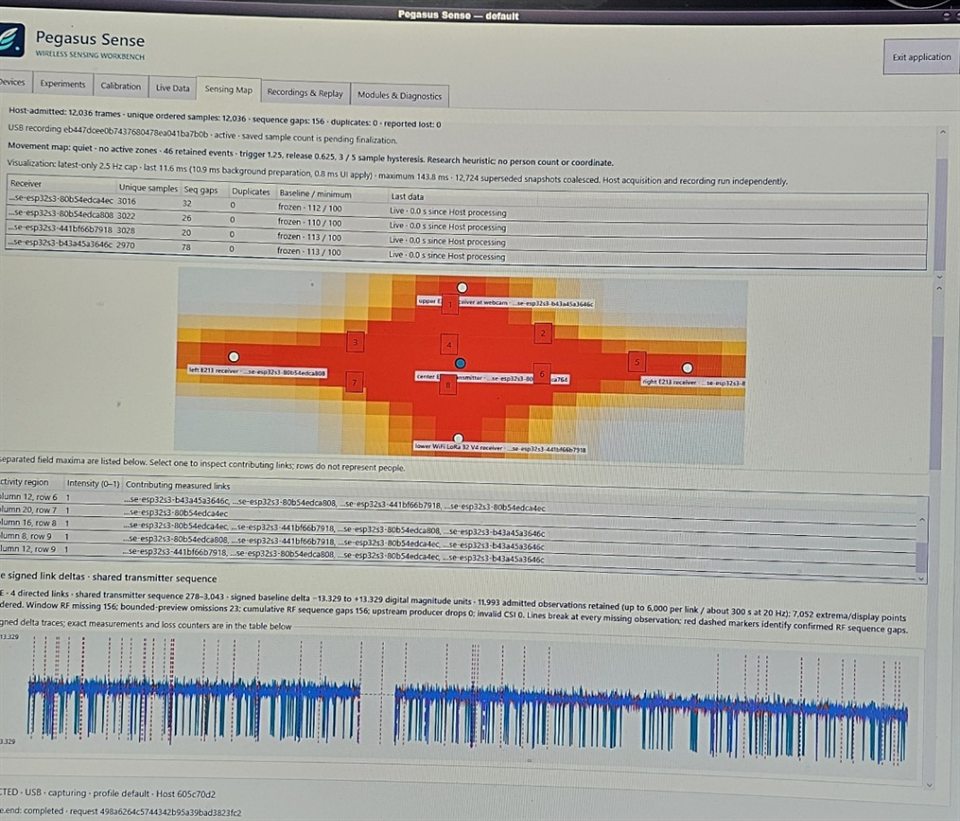
Full Pegasus Sense interface during the closer-position observation, showing stronger relative activity
Closer positionStronger relative activity in this exploratory observation.
Full Pegasus Sense interface during the farther-position observation, showing weaker relative activity
Farther positionWeaker relative activity in the same comparison.
This comparison establishes environmental responsiveness. Calibrated distance, occupancy, pose, respiration, identity, and precise localization are separate controlled evaluation stages.

Verified result

A working prototype has been exercised through software, simulation, and physical hardware.

The evidence supports a functioning Windows application, embedded-device integration, live acquisition, visual feedback, recording, and replay. The project has also been exercised with five physical boards.
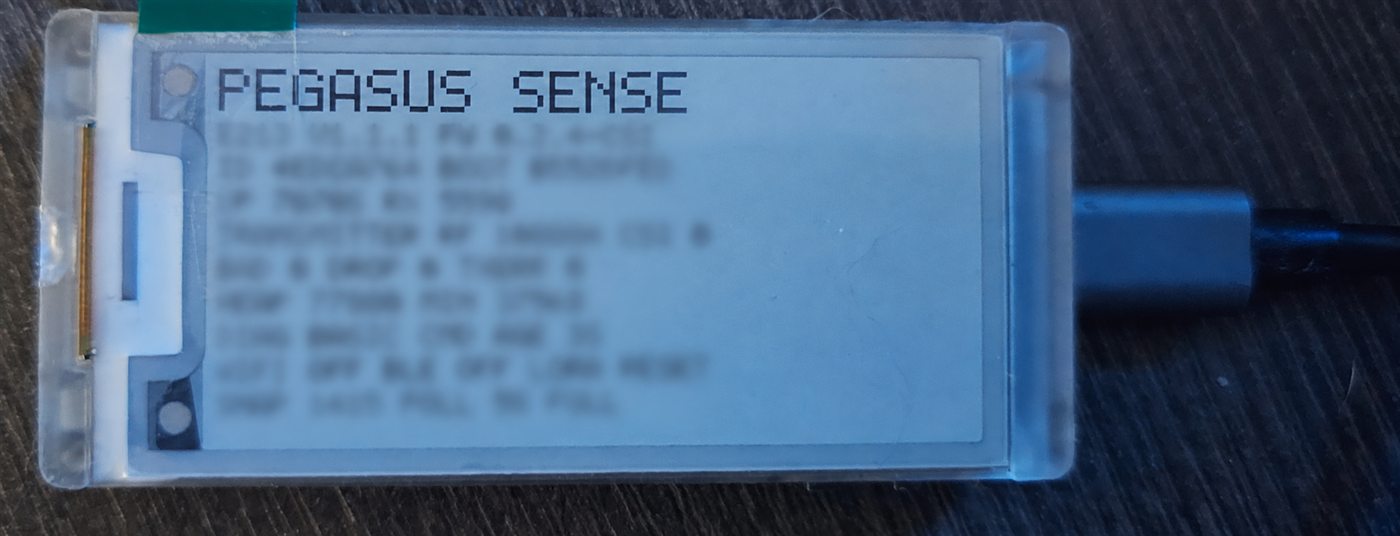
Physical Pegasus Sense ESP32-S3 e-paper device connected by USB and displaying its engineering status screen
One physical Pegasus Sense unit in engineering mode. Device-specific diagnostic values are softened in this public derivative.

Current research stage

The working platform establishes experimental responsiveness and supports the next controlled sensing studies.

The current result supports wireless-link activity research and a repeatable operator workflow. Future studies can use controlled ground truth to evaluate specific questions such as occupancy, pose, respiration, and localization one capability at a time.

Transferable capabilities

What this project demonstrates.

  • Embedded / desktop integration
  • ESP32-S3
  • Data-acquisition workflows
  • Streaming telemetry
  • Time-series visualization
  • Experiment design
  • Hardware-in-the-loop evaluation
  • Measurement integrity
  • Failure isolation
  • C# / .NET / WPF
Related AI platform workPegasus Cerebral